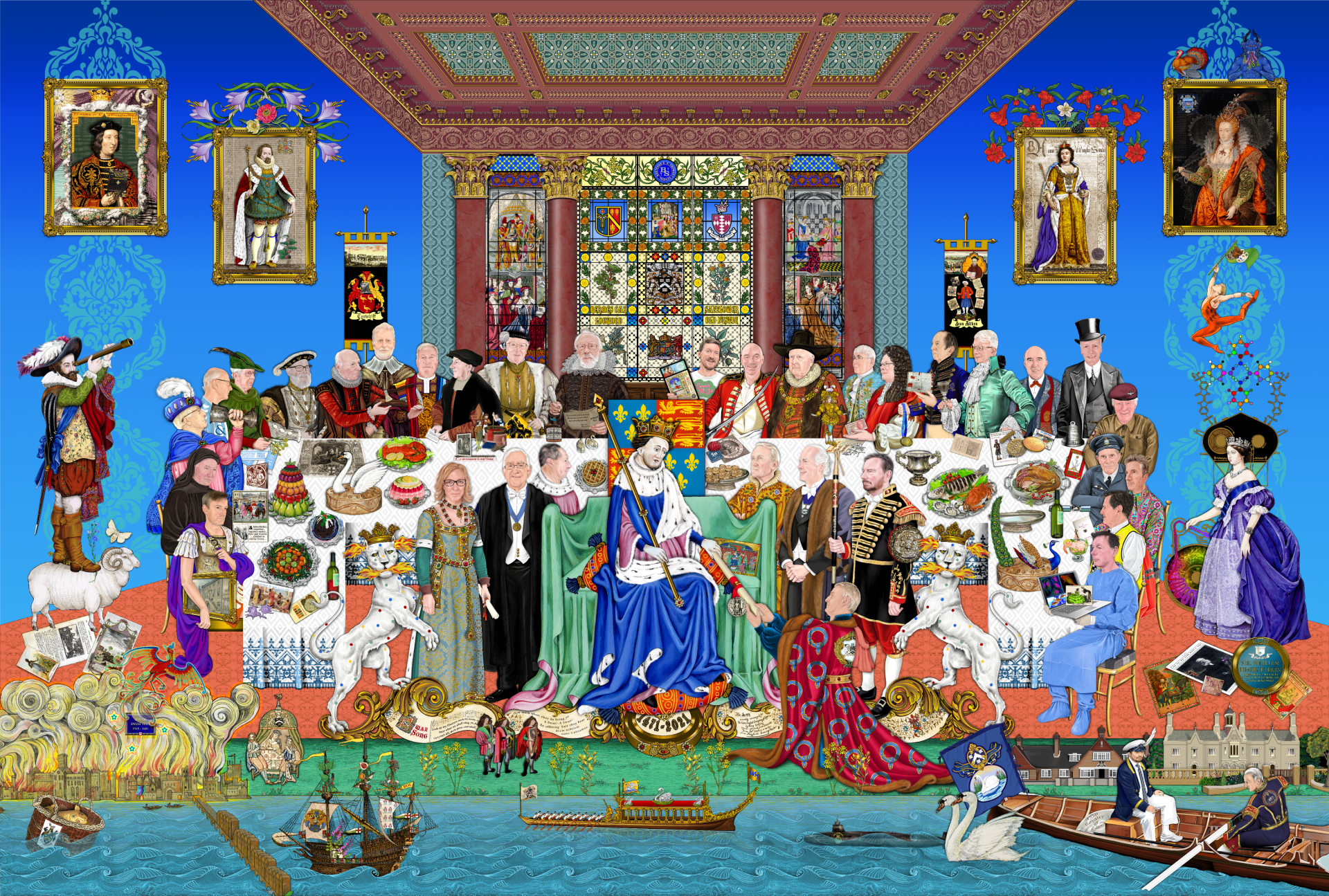
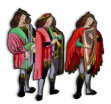
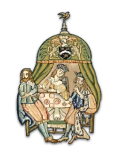
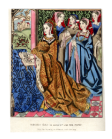
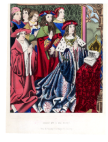
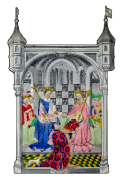
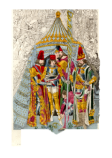
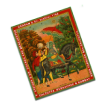
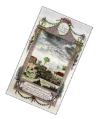
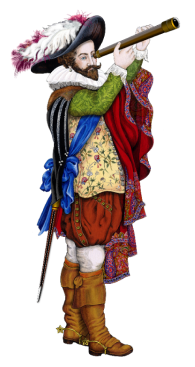
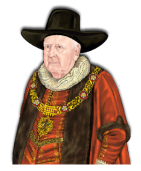
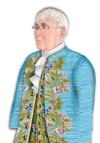
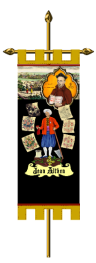
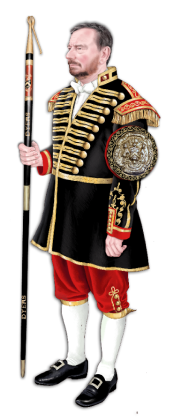
G1, G1a, G1b and G1c – A figure based on Walter Raleigh which in general represents an early age of colonial exploration and trade. In more detail, the figure’s eclectic clothing, the moth flying above him and the animals and plants upon which he stands, represent a range of natural raw materials (silk, wool, flax, leather, fur, feathers, muslin/linen, cotton and sleeves) and finished dyed textiles associated with the dyer’s craft. Some of the items of clothing such as the Kashmri shawl, chintz patterned calico jacket and ostrich plumes, symbolise the influence of western ‘discovery’ and colonisation on Britain’s history of fashion and textile manufacture. The figure is shown directing a spy glass towards the East (the right side of the artwork). It is focused on a turkey (G3a) representing the Turkey red dye* which was coveted by the west. These details, together with the figure’s sword and a set of images beneath the lamb under his feet – depicting an African woman picking Arcacia gum (a mordant) from Senegal (G1a)**; Africans gathering cochineal for red dye in South America (G1b)***; and Indians labouring on an English indigo (blue dye) plantation (G1c)**** – expose the darker side of colonial history connected to the story of dyeing. One involving commercial espionage, enslavement and the exploitation of the resources of conquered and colonised people around the globe. The theme of colonial conquest and exploitation is further represented by the figure’s fur lined, pearl encrusted cloak (representing colonial wealth) which is inspired by the one worn by Sir Walter Raleigh***** – the English explorer and military and navel commander who was granted a Royal Charter by Elizabeth I to colonise and commercially exploit any lands in the Americas not already claimed by a Christian monarch. Raleigh was also a privateer who procured tons of indigo and cochineal for England (“enough… to be use in [the] realm for many years”) by capturing and plundering the cargo of Iberian ships. As such, his sword also represents how conflict and piracy between western nations vying for control of lucrative dye substance markets was also part of dye history.
A brilliant scarlet colour introduced into Europe through the Turkey red printed fabrics exported from India and first perfected in the west by the dyers of Holland and France who were “determined to keep the technique secret and despite espionage expeditions and financial incentives from the Society of Arts in London, it was not adopted successfully in Britain until the 1780s, first in Manchester and then Glasgow”. (cited from National Museums Scotland website article, The Turkey Red process.)
** From a 1900’s trade card
*** From a woodcut print, dated 1835
**** From a Copperplate engraving, dated 1778
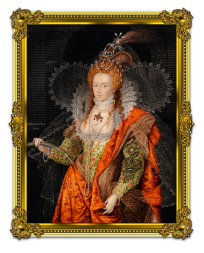
***** As depicted in a 1588 portrait by an unknown English artist, now in the collections of the National Portrait Gallery.