This copy is for The Dyers Company by way of thanks for their help in providing some biographical detail about the testator.
PROB 11 -9-175 Doggett Scans 137 – 139 folios 682 – 69r
Scan 137 [fol.68r]
Passio domini nostri Jh[es]u Cristi p[er]ducat nos ad gaudia p[ar]a
disi amen And in the name of god amen The ixth day of Junij the yere of
oure lord god MCCCCLxxxxij And the vijth yere of the Reigne of Kyng Henry the vijth
I Thomas Reede Citezen and Dier1 of london though I be visited with Sykenes nev[er]
theles being hole of mynde and in good memory Laude and praising be unto my
lord god understonding that nothing is so certaygne as is deth And nothing more
uncertaygne than the hou[re] therof not willing by the grace of god to dep[ar]te oute
of this mortall lif intestate make and ordeigne this my p[rese]nt testament conteynyng
therin my Last will of my Landes and tenement[es] here undre wryten in the ma/
ner and fo[ur]me folowing that is to wite First I bequeth and Recommend my soule to all
myghty god my maker and my redem[er] And to the most glorious virgine his modre ou[r]
Lady saint mary And to all the holy College of saint[es] And my body tobe buried
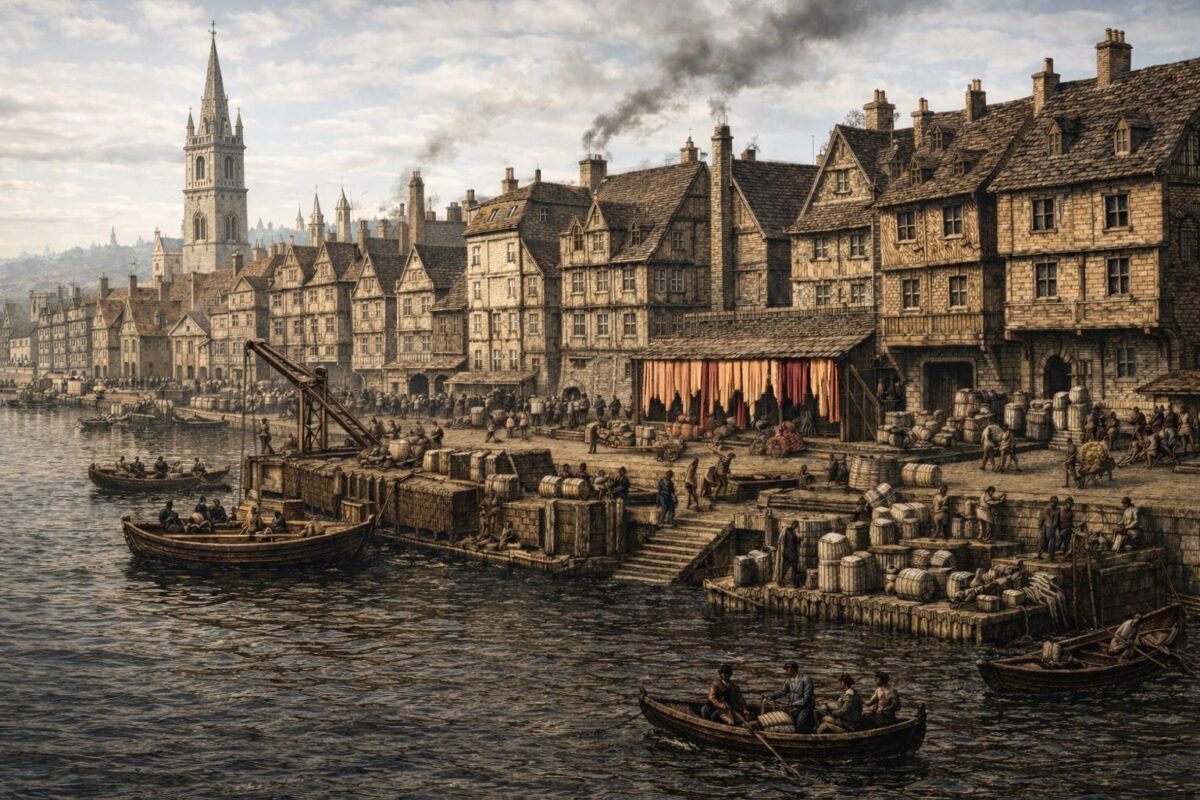
in the p[ar]issh church of saint Benett besides Powlys Warf2 of London that is to
wite in a Convenient place ther[e]aftre the discrecion of Letice my wif And aftre
my body be so buried thanne I woll that all the dueties which I owe of right or of
conscience to any maner of p[er]sonne or p[er]sonnes be first and formost and before all
other thinges wele and truly paied or set in a sure way tobe paid And aftre that
donne than I bequeith to the high Aulter of the said p[ar]issh church of saint Benet
for my thithes and oblacions witholden or forgoten if any so be in discharge of my
soule vj s viij d Item I bequeth to the Werkes of the body pf the same p[ar]issh church
for my saide sepulture tobe hadde therin x s Item I bequeth tobe disposed the day
of my decesse amonge poure people for my soule and tobe distributed amonge them
aftre the discrecion of Letice my wif xl s Item I bequeth to the vj p[er]sonnes of my
Craft of Dyers that shall bere my body dede to the church and so to my buring
vj of my spones of silv[er] aftre the discrecion of Letice my wif that is to ev[er]ich of them
one spone Item I bequeth to the Wardins and feliship of my craft of Diers to do them
Worship with all at such recreations as they shall use to make to ………to remayne
amonge them as longe as it may endure to thentent that woll like them to have my
soule the more tenderly in Remembra[u]nce amonge them my gilt Cup covered
pounsede with margarites Item I woll that mi \ij/ tenement[es] set at stewes side3 be
sold assone as they may goodly aftre my decesse by the saide Letice my wif at as
good price as she shall selle them And I woll that the p[er]sonnes that beth my feoffes
or my coefeoffes of and in the same make a sufficiant astate in the Lawe whane
they shalbe required therto by my saide letice my wif unto that p[er]sonne or thoo
p[er]sonnes to whome the said sale by the said Letice my wif so shalbe made of
and in the saide ij tenement[es] set at the said stewes side to have and to hold unto
them in fee simple And of the money com[m]yng of the same sale I woll that
Johanne Colyns4 my doughter have xx li to hire owne use of my gift And
I woll that Letice Colyns hir suster5 have other xx li therof my gift tobe
delyvered unto hir whan she shall come to hir Laufull age of xxj yeres or els
Whane she shalbe mariede And I woll that the same xx li remayne in the
keping of the said Letice my wif tyll the said Letice Colyns come to hir said
Scan 138 [fol. 68v]
Age or mariage if the same Letice my wif live so longe And if she dey in the meane
tyme Thanne I will that the worshipfull p[ar]sonne Robert Lytton squier my sonne in
Lawe6 have the custodie of the same xxli till the said Letice Colyns come to hir saide age
of xxj yeres or els to hir saide mariage . And thanne tobe delyvered unto hir And if
the saide Letice Colyns happen to dey before she come to hir said age or mariage
thanne I woll the saide xx li by me assignede to the said Letice Colyns Immediatly
aftre the decesse of the same Letice Colyns be delyvered unto the said Johan[n]e Colyns
my doughter hir modre she to have it to hir owne propre use if she ov[er]live hir saide
dought[er] And if she dey before hir said doughter thanne I woll that the same xxli re
mayne to sume other childe of my same dought[er] such as it shall seame best tobe done
aftre the discrecion of the saide Letice my wif And els of the saide Robert Lytton
if any such child of hirs be than[n] alyve ….if not Than[n] the saide xx li tobe given to
such a p[er]sonne as shalbe next of the Kynred of the said Johanne my dought[er] And
the Residue of the money commyng of the same sale of the saide ij tenementes
at the stewes side I woll it be deposed by my saide wif that is to say part therof
in pety Cotes7 hosyn8 and shonne9 amonge people And namely poure people of the
Contrey And in other p[ar]te therof in amending of high wayes where most ned
shalbe thought tobe donne by the discrecion of my saide wif where as I the saide
Thomas Rede And other certayne p[er]sonnes at my deno[m]i[n]acion being my cofeoffes
Late were Laufully seaside in our Demesne as of Fee of and in iij tenementes of old
tyme called the Spore10 sett and being in Thamestrete in the said p[ar]issh of saint Benett[es]
beside Powlys wharf of London afore ageinst the church ther[e] of the same saint Benett
Hit is so that all my saide cofeoffes of and in the same iij tenementes beth passed
to god And I have overlyved them all and so by survyvon and by right of ovreli
ving I am sole seased of and in the same tenement[es] with their appurten[au]nc[es]
the day of the date of this my p[rese]nt testament in my demesne as of Fee and ther
fore I being seased yeve and bequeth the same iij tenement[es] of old tyme called the
Spore with thappurten[au]nces to the said Letice my wif to have and to hold to her and
to her assignes terme of her lif And I woll that she kepe due Rep[ar]acion of theim
terme of her lif as that for Lack of due Rep[ar]acion they fall not in decay I woll and
bequeth by this my p[rese]nt testament that Immediatly aftre my said wife decesse the said
iij tenement[es] of old tyme called the Spore with thappurten[au]nces shall Remayne to Robert
Rede my sonne if he can be founde on live to have unto hym and to heires for ev[er]more
And if the saide Robert be thanne dede than[ne] I woll and bequeith by this my present
testament that the said iij tenement[es] of old tyme called the spore with thappurte
naunces shall Immediatly aftre my said Wife decesse remayne to the iij children
here undrewriten that is to say one tenement therof standing next atenement
ther[e] Late callid the sign of the George11 shall remayne to Thomas Lytton
nowe on[e] of the sonnes of the said Robert Lytton to have unto hym and to his hey
res for ev[er]mor And the Middill tenement of the said tre tenement[es] shall remayn
to George Lytton brother to the said Thomas to have to hym and to his heires
for ev[er]more And the thirde tenement of the said iij Tenement[es] Wherin Richa[r]d
Radich now dwellith shall remayne to the saide Letice Colyns the dought[er] of
the saide Johanne Colyns my dought[er] And to her heires for ev[er]more I will that
the p[er]sonnes which stand enfeoffed to myn use of and in my tenement called
Cristendomes with all thappurten[au]nc[es] sett and being in the p[ar]issh of Westh[a]m
in the Countie of Essex togider & with a dovehouse stonding on the West
side of the said tenement And w[i]t[h] xj day werk[es] of land closed in and lying
therto And in all the free Land that I have Lying in the mershes12 Westh[a]m
aforesaid whanne my same feoffes shalbe required by the said Letice my wif aftr[e]
my decesse shall make a sufficient astate in the Lawe to the same Letice my
wif of and in the same tenement called Cristondomes with the said dovehouse
Scan 139 [fol. 69r]
day werkes and free lande aforesaid with thappurten[au]nces to have and to hold to the same
Letice my \wif/ and her assignes for terme of her lif And aftre her decesse I woll that [th]e
same tenement with the said dovehouse day werkes and free Lande aforesaide And other
thappurtenaunces Remayne to the saide Robert Rede my sonne if he thanne be founde ov[er]
live to have unto hym and to his heires for evermore And if he thanne be founde dede
thanne I woll that the same tenement called Cristendomes with the dovehous day
werkes and free lande aforesaide and other appurtenaunces shall Immediatly aftre
my said wifes decesse remayne to William Lytton sonne and heire apparant to the
said Robert Lytton to have and to hold to the same William and to his heires for ever
more Item I woll thoo p[er]sonnse that to myn standen feoffed in my tenement
with the gardyn adioynyng therto in churchstrete in the said p[ar]ish of Westh[a]m And
of and in iij Acres of Lande lying to the same tenement in the same p[ar]issh Whan
they shalbe required by the said Letice my wif shall cause a sufficient astate in
the Lawe tobe made to the said Letice Colyns dought[er] of my said dought[er] Joh[an]ne
Colyns of and in the said tenement in churchstrete aforesaid with the said gardyn
and iij Acres of Land longing and lying therto to have and to hold to the said Letice
Colyns if she live tyll she come to her said age of xxj yeres or els tyll she be
maried And thanne to her heires for ev[er]more And if she dey before that she come to
her saide age of xxj yeres or before that she be mariede Thanne I woll that the said
tenement in the saide church strete with the said gardyn And iij Acres of Land ad
ioynyng and lying therto shall remayne to the said Johanne Colyns my dought[er] to have
and to hold thanne unto her and to her heires for evermore Item I bequeth to Thomas
Huntman sumtyme myn apprentice to pray for my soule xx s Item I bequeth to
Margery Mattoke my s[er]v[au]nt in like wise xxs Item I bequeith to Robert Hatton my
S[er]v[au]nt in like wise xxs Item I bequeth to Richard Hatton sumetyme myn app[re]ntice
in like wise xx s Item I bequeth to Margery Patrike my s[er]v[au]nt in like wise vj s
viij d Item I bequeth to Richard Lytton of the kynges escheker tobe frendely to my
wif in such besynes as she shall have nede to occupye hym with all xx s Item
I bequeth to Nicholas Radich tobe frendely to my said wif undre like forme xxs
Item I p[ar]don to William Dubbelday all the dute that he owith me except x li the
which x li I woll that he pay unto my saide wif Item I p[ar]donne to John Sonday
sherman vj li of the dutie the which he owith me Item I p[ar]donne to William loyal
ton all the dutie that he owith me Item I p[ar]donne to Richard Cokke[s] of hadleigh all
the dutie that he owith me And the Residue of all my goodes Catalles and dett[es]
what soev[er] they be aftre my dett[es] paide my fun[er]all expenses full donmy lega
cies conteyned in this my testament fulfilles And all other charges bo[ur]ne And
don for me that owen tobe bo[ur]ne and donne I geve and bequeath holy to the said
Letice my wif she to do therwith hir owne fre disposicion and liberte saving
therof I resine and bequeath to the said Robert Lytton to thentent that it will
please him tobe surveyo[ur] of this my p[rese]nt testament and Last Will And also tobe ad
uto[ur] and good councelor to my said wif in executing of this my p[rese]nt testament and
Last Will v marce And of this my p[rese]nt testament and Last Will I make and or
deigne the saide Letice my wif my sole executrice And I make and or deigne the
said Robert Lytton esquier her surveyo[ur] of the same Thanne their being p[re]sent
John Wynne Nicholas Radych John Smyth Wiiliam Fowler John Wetnale
And other Wittnesses to the p[re]misses called And specially required And for mor[e]
Witnesse therof to this my p[rese]nt testament I have set my seale the day and yere
Abovesaid
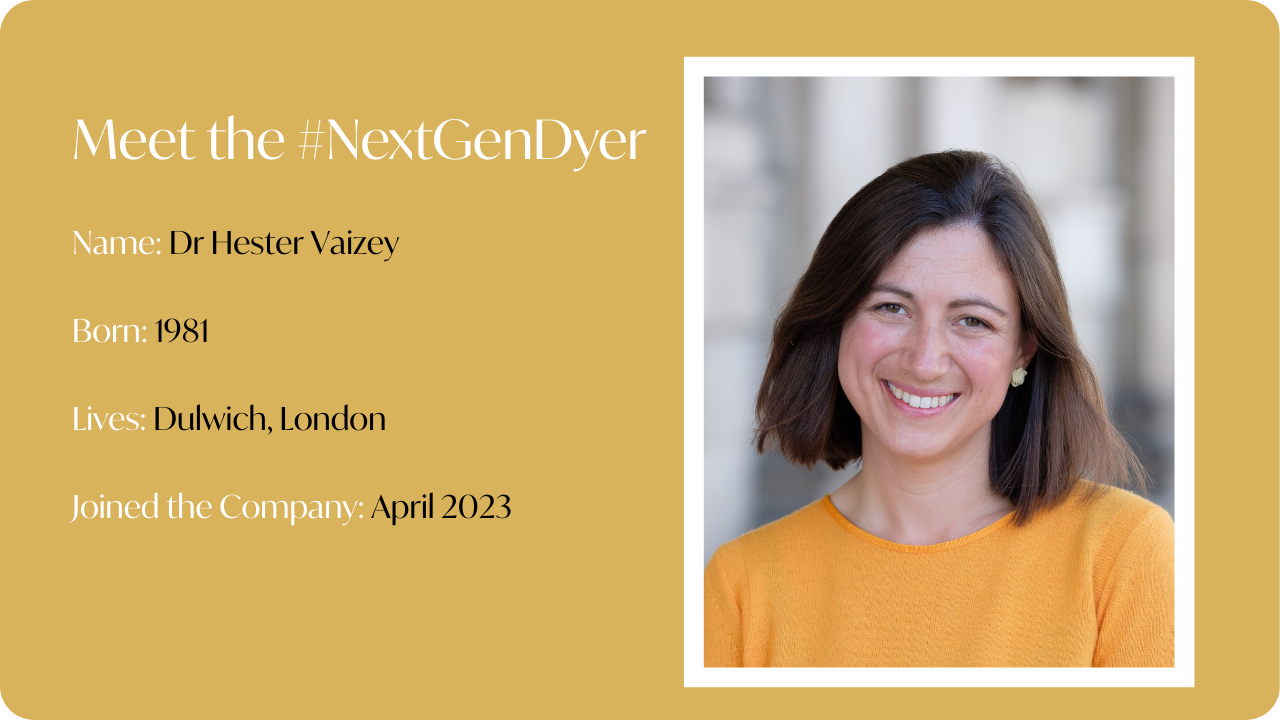
1 Thomas Reede is named in the Dyers’ Charter of 1471 as one of the “free men of the mystery of dyers of our City of London that themselves whether someone or somebody of them, to the praise glory and honour of almighty god and the most glorious virgin Mary his mother, he and they are able to make, found and establish to last for periods of future lifetime a certain brotherhood or everlasting guild of two Wardens and the community of free men of the mystery of dyers within the said City of London and the same suburbs”. He was a member of their Court of Assistants and in a list of the twelve men he appears in 6th place which indicates he was quite senior in this court at this time. This was a key time for the Dyers’ and it was when they bought property which became their first Hall. Many thanks to Ian Mackintosh and Sebastian Cooper, archivists of the Dyers’ Company, for providing this information.
2 In his Survey of 1598 John Stow writes that “St Benet Hud or Hithe, against Powle’s Wharf, is a proper parish church”.
3 A map of 15th century London in “Prejudice and Promise in 15th century England” by C L Kingsford, 1962, shows the location of Stews Side in Southwark, close to both the Pike Garden which was a series of artificial fish ponds and also to the brothels which thrived in this Liberty, being outside city jurisdiction. The name Stews Side could derive from either of these two nearby locations. Kingsford writes that “this location was full of inns for travellers and that it had a bad reputation for ill fame and mean tenements inhabited by needy persons, aliens and others”. Stow says of the same place that “it consisteth of divers streets, ways and winding lanes, all full of buildings, inhabited”.
4 Married William Colyns
5 should be “her daughter” – scribe error?
6 He married Thomas Reed’s eldest daughter Agnes who pre-deceased her father.
7 waistcoats
8 breeches or stockings
9 shoes
10 Perhaps the “Spur” of “Spurre” (formerly the Spore) one of London’s earliest inns – see “London’s Signs” by B Lillywhite pub. Allen and Unwin, 1972
11 Another inn – Stow refers to this as a “fair inn” (it is close to Chaucer’s “Tabard”)
12 Hackney Marshes – extensively drained and attempts made to control the flow of water during medieval era